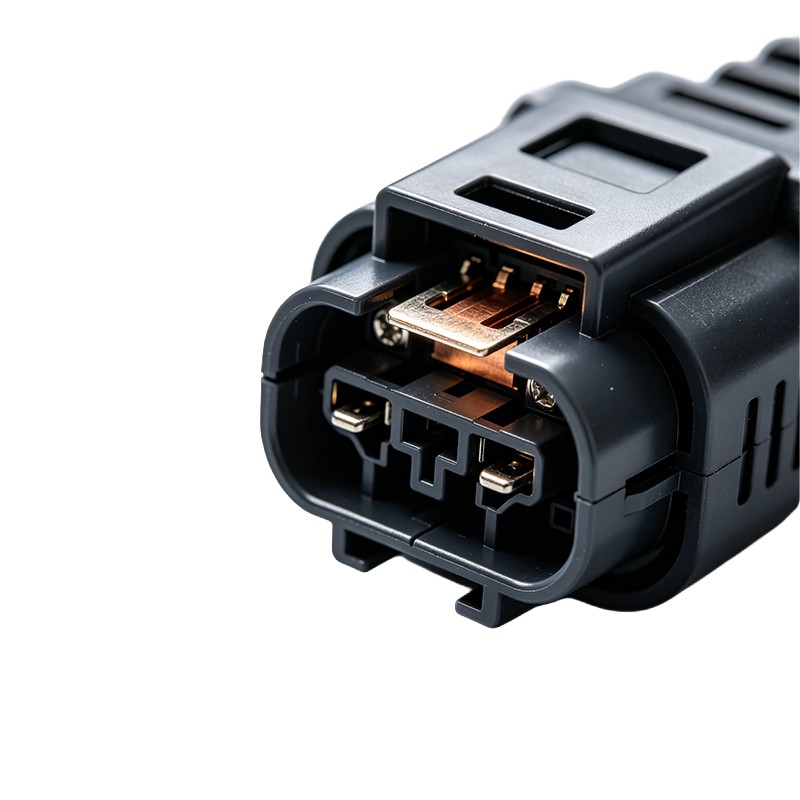
Board-to-Board (BTB) connectors are utilized to interconnect two PCBs or a PCB and an FPC. Among all connector product categories currently available, they boast the strongest signal transmission capabilities and the widest range of applications, offering advantages such as noise reduction, stable high-frequency transmission, a thin and lightweight profile, and the elimination of the need for soldering. To align with the industry trend toward thinner and lighter mobile devices, BTB connectors must achieve ultra-low profiles and ultra-fine pitches. This imposes stringent requirements on product design, mold precision, and automation levels, resulting in complex manufacturing processes and significant production challenges. The prevailing trend in BTB connectors for mobile phones involves a continuous reduction in both pin pitch and height; while the 0.4mm pitch currently dominates the market, the standard is gradually evolving toward 0.35mm-or even smaller-while BTB heights are simultaneously decreasing to as low as 0.9mm. A single mobile device, such as a smartphone, may incorporate anywhere from 7 to 10 pairs of BTB connectors; feature-rich and structurally complex smartphone models may utilize as many as 20 pairs.
In the 5G era, millimeter-wave technology is driving an increase in the number of antennas and structural upgrades, thereby stimulating demand for LCP/MPI materials and RF BTB connectors. Antenna-in-Package (AiP) technology integrates the antenna, RF transceiver, and RF front-end components within a single package; in this context, BTB connectors serve to bridge the connection between the baseband unit and the RF front-end of the antenna. This approach represents a departure from the traditional "antenna + coaxial connector" configuration, giving rise to innovative solutions such as the "traditional antenna + LCP/MPI FPC + RF BTB connector" architecture.