
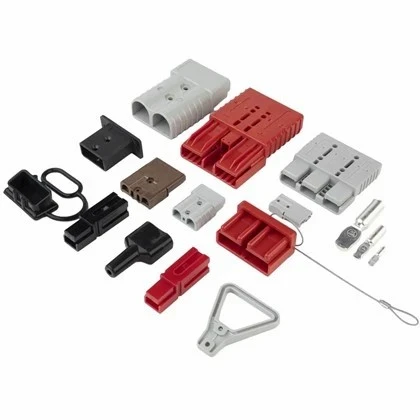
Internal Plastic Supports For Connectors
Precision Internal Plastic Supports for Connectors
Internal plastic supports function as the structural and dielectric backbone within multi-pin electrical and electronic connectors. They secure individual contact pins, prevent short circuits under high-density spatial layouts, and preserve exact pin-pitch positioning against severe mechanical vibration and insertion cycling.
Configured for automated assembly lines and harsh operating environments, these precision-molded components integrate directly into industrial, automotive, and telecommunications connector shells. Manufactured via high-precision injection molding using engineering-grade thermoplastic resins, they satisfy rigorous electrical isolation and structural retention standards.
Specifications
|
Parameter |
Specification Details |
|
Supported Connector Systems |
Circular (M8/M12/M23), Heavy-Duty Rectangular, Micro-D, Automotive ECU Housings |
|
Pin Pitch Tolerance |
±0.015 mm (multi-cavity precision tooling configuration) |
|
Engineering Resins |
PBT (GF30), PA66 (GF25), LCP, PPS, PC |
|
Flame Retardant Class |
UL94 V-0 (0.75 mm thickness) |
|
Operating Temperature Range |
-40°C to +150°C (LCP/PPS grades rated up to +200°C) |
|
Dielectric Strength |
≥20 kV/mm |
|
Volume Resistivity |
>1 × 10¹⁴ Ω·cm |
|
Regulatory Compliance |
RoHS, REACH, UL Certified, ISO 9001, IATF 16949 |
Features
Dimensional Stability: Controlled mold-shrinkage parameters and low thermal expansion coefficients prevent pin binding or pitch drift during thermal shifts.
Flash-Free Pin Channels: Optimized parting-line engineering and tight tool clearances eliminate micro-burrs inside pin holes, preventing assembly jams on automated insertion equipment.
High Dielectric Isolation: High volume resistivity prevents electrical tracking and cross-talk across high-density terminal arrays.
Mechanical Retention: Engineered snap-fit or interference-lock geometries anchor the support securely inside outer metal or plastic connector shields.
Materials & Manufacturing
Engineering Resin Selection
Resin selection aligns directly with structural load and thermal exposure parameters:
PBT (30% Glass Fiber): Standard for industrial connectors; balances dielectric strength, chemical resistance, and mechanical rigidity.
PA66 (25% Glass Fiber): Applied in automotive wiring harnesses requiring high impact resistance and continuous vibration fatigue endurance.
LCP / PPS: Specified for thin-wall, high-density micro-connectors requiring structural retention during lead-free SMT reflow soldering (>260°C).
Production Capabilities
Molding Machinery: Electric injection molding presses (Fanuc/Sodick) featuring closed-loop injection pressure control (±0.1 bar) to eliminate sink marks and internal micro-voids.
Tooling Construction: Hardened steel molds (Stavax/NAK80) machined via high-speed CNC and wire EDM, maintaining cavity-to-cavity variance below 0.005 mm.
Cleanroom Production: Class 100,000 cleanroom environments available for sensitive telecom and medical connector components to prevent particulate contamination.
Applications
Automotive Electronics: Engine control units (ECU), transmission sensors, and high-vibration engine-bay wiring harness assemblies.
Industrial Automation: M8/M12 sensor interfaces and modular heavy-duty industrial plugs requiring oil and chemical resistance.
Telecommunications: High-density backplane connector blocks requiring micro-pitch accuracy.
Medical Equipment: Patient monitor interface plugs engineered for repeated sterilization cycles.
Customization
Produced from customer-supplied CAD models (STEP, IGES, Parasolid).
Rapid Prototyping Tooling: Aluminum or P20 steel prototype molds delivered within 10 to 14 days for functional evaluation.
Resin Compounding: Custom glass-fiber ratios (15% to 40%), carbon-fiber integration for electrostatic discharge (ESD) control, and laser-markable additives.
Color Coding: Pantone-matched resin pigmentation for instant visual pin-code identification during harness assembly.
QC & Quality Assurance
Component reliability is validated through a structured inspection framework:
Dimensional Metrology: Automated optical non-contact measurement (Keyence IM Series / CMM) verifying pin-hole diameter, pitch distance, and wall thickness against 3D CAD data.
Material Verification: Incoming resin batches verified via melt flow index (MFI), ash content analysis (fiber ratio verification), and FTIR spectroscopy.
Functional Testing: Insertion/withdrawal force testing and high-voltage breakdown testing executed per ISO 2859-1 sampling plans (AQL 0.65).
Traceability: Laser-etched lot numbers on packaging provide end-to-end traceability from raw resin pellet to finished molded batch.
FAQ
Q: What is the lead time for custom tooling and engineering samples?
A: Initial prototype tooling and samples require 12 to 15 days from drawing approval. Production-grade multi-cavity tooling takes 20 to 25 days.
Q: Can you provide UL yellow cards and material compliance documentation?
A: Yes. All engineering resins are sourced from certified global producers (e.g., DuPont, Celanese, SABIC) with full UL94, RoHS, and REACH documentation supplied per shipment.
Q: How do you control warpage in thin-walled LCP connector inserts?
A: Mold-flow CAE simulation is performed prior to steel cutting to optimize gate positioning, runner balancing, and cooling layouts, controlling warpage within ±0.05 mm.
Q: How are delicate micro-parts packaged for international transit?
A: Parts are packed in anti-static thermoformed blister trays or ESD shielding bags inside rigid corrugated boxes to prevent mechanical deformation during shipping.
RFQ
To receive a technical review and formal quotation within 24 hours, please include:
CAD Data: STEP, IGES, or PDF technical drawings with critical tolerances.
Material Specs: Required resin grade, glass-fiber content, or operating temperature threshold.
Volume: Estimated annual usage (EAU) and pilot batch quantity.
Compliance Requirements: Mandatory standards (e.g., UL94 V-0, IATF 16949 PPAP Level 3 documentation).
Hot Tags: internal plastic supports for connectors, China internal plastic supports for connectors manufacturers, suppliers, factory
Send Inquiry
