
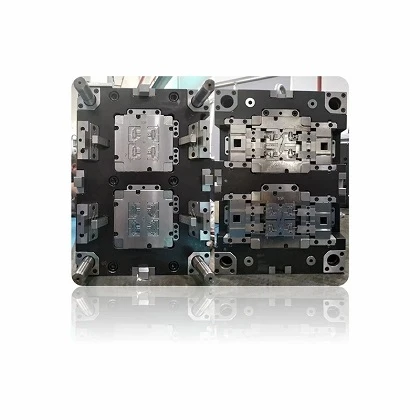
Precision Plastic Retaining Components
Overview
Precision Plastic Retaining Components: Engineering & Sourcing Guide
Precision plastic retaining components provide secure axial positioning and retention for shafts and bores in mechanical assemblies. Unlike metal alternatives, engineering-grade thermoplastic retaining rings offer corrosion resistance, electrical insulation, and vibration dampening without scoring mating metal components. Optimized for automated assembly and consistent snap-fit performance in high-volume production.
Specifications
Standard Size Range: Shaft diameters from 2 mm to 100 mm (custom dimensions available upon request).
Dimensional Tolerances: ISO 2768-m (Precision injection molded to ±0.05 mm critical features).
Operating Temperature Range: -40°C to +120°C (dependent on resin grade).
Mechanical Performance: High elastic recovery verified via ASTM D638 / ISO 527 testing.
Material Compliance: RoHS, REACH, and UL 94 V-0 flame retardant grades available.
Quality Management: Manufactured in an ISO 9001 certified facility (IATF 16949 certified quality management system available for automotive applications).
Features
Non-Conductive & Corrosion-Proof: Eliminates galvanic corrosion in multi-material assemblies and prevents short circuits in electrical enclosures.
Low Friction Coefficient: Minimizes wear against rotating metal shafts during axial shifting.
Elastic Memory: Retains clamping force and snap-fit integrity through repeated assembly and disassembly cycles.
Weight Reduction: Reduces assembly weight by up to 70% compared to carbon steel snap rings.
Automation-Friendly: Designed with consistent geometries optimized for automated robotic grippers and high-speed mechanical assembly lines.
Materials & Manufacturing
Material Options
POM (Polyoxymethylene / Delrin): High stiffness, low moisture absorption, excellent dimensional stability.
PA66 / PA46 (Nylon): High impact resistance and fatigue endurance under dynamic loads.
PEEK: For extreme thermal (>250°C) and chemical resistance environments.
In-House Manufacturing Capabilities
Injection Molding: Electric injection molding machines (50T to 200T) equipped with closed-loop cavity pressure monitoring.
Mold Tooling: High-precision CNC machining and EDM wire-cutting achieving cavity tolerances within ±0.005 mm to eliminate flash on snap-fit edges.
Annealing: Controlled thermal post-curing to eliminate internal stresses and stabilize dimensions.
Applications
Automotive Sub-assemblies: Window regulator motors, seat adjustment linkages, and dashboard snap-fit housings.
Consumer Appliances: Axial shaft retention in washing machine pumps and fan motors.
Industrial Automation: Small pneumatic actuators, roller bearings, and guide rail locks.
Medical Devices: Diagnostic equipment housings and non-magnetic actuator components.
Customization
Custom Tooling: Rapid prototype tooling (lead time: 10–15 days) and production-grade hardened steel molds.
Resin Modification: Custom compounding with glass fiber (GF15, GF30) for increased rigidity or PTFE additives for reduced friction.
Color Coding: Pigment compounding available for visual identification on assembly lines.
Quality Control
Dimensional Inspection: Automated optical sorting systems (CCD) 100% inspect critical ID/OD and thickness dimensions.
Mechanical Testing: Universal testing machines measure insertion force, extraction force, and axial shear load.
Process Control: SPC (Statistical Process Control) tracked in real-time across all molding cells; full material lot traceability from resin pellet to final shipment.
Documentation: Certificate of Conformance (CoC), material data sheets, and dimensional inspection reports supplied with every production lot.
FAQ
Q: How do plastic retaining rings compare to metal snap rings in load capacity?
A: Plastic components are engineered for light-to-medium axial loads. They absorb shock and vibration better than metal but should not be used in high-load structural joints meant for steel rings.
Q: Do these components require specialized installation tools?
A: Most standard sizes can be installed manually or using basic tapered assembly mandrels to prevent over-stretching beyond the elastic limit.
Q: Can you provide material test reports with shipments?
A: Yes. Material CoC, RoHS declarations, and raw material batch reports are included with every delivery.
RFQ
Ready to discuss your project? Send your requirements to our engineering team to receive a technical evaluation and quotation within 24 hours.
Please include the following details for an efficient response:
2D/3D Drawings: STEP, IGES, or PDF format with critical tolerances highlighted.
Material Specification: Operating environment, temperature limits, and required resin grade.
Mechanical Requirements: Minimum axial load or retention force required.
Volume: Annual usage and targeted batch sizes.
Hot Tags: precision plastic retaining components, China precision plastic retaining components manufacturers, suppliers, factory
Send Inquiry
