
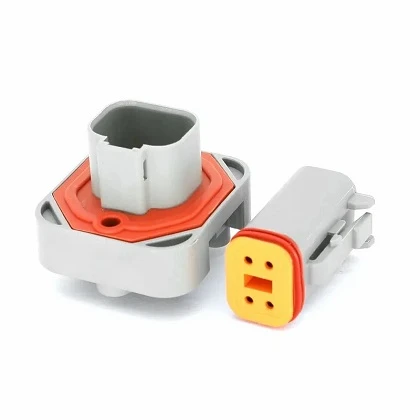
PCB Plastic Support Components
PCB Plastic Support Components: Engineering & Sourcing Guide
PCB Plastic Support Components provide mechanical spacing, structural isolation, and secure snap-fit retention for printed circuit boards. Designed to eliminate short circuits and withstand thermal cycling, these components integrate directly into sheet metal chassis or plastic enclosures without requiring threaded hardware.
Specifications
|
Parameter |
Standard Metric Range |
Engineering Standard / Notes |
|
Material |
Nylon 6/6 (PA66), Flame Retardant PC, POM |
UL94 V-2 to UL94 V-0 flammability ratings |
|
Hole Diameter (Chassis) |
3.0 mm to 6.5 mm |
Fits standard punch/drill tolerances |
|
Board Thickness |
0.8 mm to 2.0 mm |
Accommodates single and multi-layer PCBs |
|
Standoff Height |
3.0 mm to 50.0 mm |
Precise clearance control for underside components |
|
Operating Temperature |
-30°C to +85°C (PA66) / +120°C (PC) |
Continuous thermal endurance limit |
|
Color |
Natural (Off-white), Black |
Custom color matching available upon request |
Features
Tool-Free Snap-Fit Design: Flexible locking barbs allow rapid manual insertion into chassis mounting holes while providing secure retention against vibration.
Electrical Insulation: Non-conductive thermoplastic construction prevents grounding issues and electrical shorts between the PCB traces and metallic enclosures.
Vibration Damping: Resilient polymer matrix absorbs mechanical shock, reducing stress transmitted to solder joints during field operation.
Consistent Mold Retention: Strict gate-cutting and cooling protocols prevent warping, ensuring insertion force and extraction force remain within uniform specification limits.
Materials & Manufacturing
Resin Selection: Virgin Nylon 6/6 and engineering-grade Polycarbonate sourced from certified petrochemical producers. Regrind material is strictly prohibited for critical structural parts.
Injection Molding Setup: Produced using high-precision electric injection molding machines (clamp force 50T–150T) equipped with closed-loop shot control to maintain dimensional stability across multi-cavity mold blocks.
Tooling Control: Hardened steel molds (H13/P20) maintained via scheduled ultrasonic cleaning and optical comparator verification to limit flash and dimensional drift.
Applications
Industrial Control Panels: Securing PLC mainboards and driver boards within metallic electrical cabinets.
Power Supplies: Isolating high-voltage inverter boards from grounded aluminum heat sinks and chassis bases.
Automotive Electronics: Mounting sensor interface modules inside vibration-prone vehicle engine compartments and dashboard housings.
Telecommunications Hardware: Organizing stacked PCB architectures inside rack-mounted routing equipment.
Customization
Dimensional Adaptation: Custom standoff heights, alternative head profiles, and non-standard chassis hole diameters engineered via rapid prototype tooling (3D printing validation followed by aluminum soft tooling).
Material Modification: Glass-filled nylon for enhanced rigidity, or specialized anti-static (ESD) formulations for sensitive semiconductor assembly lines.
Packaging Solutions: Bulk bag packaging or automated pick-and-place carrier tape options tailored to SMT or manual assembly floor workflows.
QC
Incoming Material Verification: Melt Flow Index (MFI) and moisture content testing performed prior to material loading.
Dimensional Inspection: Automated optical measurement (CMM / Profile Projector) monitoring critical snap-fit barb dimensions and wall thicknesses every 2 hours during production runs.
Mechanical Testing: Destructive push-out and pull-out load testing executed on sampled batches to verify insertion durability and structural retention limits.
Traceability: Lot numbers stamped on master cartons linking directly to raw material batch certificates and molding parameter logs.
FAQ
Q: Are these components compliant with RoHS and REACH regulations?
A: Yes. All standard parts are molded from raw materials fully compliant with RoHS (Directive 2011/65/EU) and REACH substance restrictions. Material declaration sheets (IMDS) are available upon request.
Q: Can these supports withstand wave soldering temperatures?
A: Snap-in supports are typically installed after soldering operations during final mechanical assembly. If pre-assembly exposure to high-temperature reflow is required, high-temperature engineering plastics (such as LCP or PPA) must be specified.
Q: What is the typical lead time for standard stock vs. custom items?
A: Standard catalog items ship within 3 to 5 business days. Custom tooling projects require 15 to 20 business days from drawing approval to initial sample submission (PPAP Level 3 available).
Q: Are evaluation samples available for engineering validation?
A: Yes. Standard free engineering samples (up to 50 pieces) are available within 48 hours for prototype testing and functional verification.
RFQ
To receive a prompt technical review, commercial quotation, and free evaluation samples, please provide the following parameters in your inquiry:
Part Number or Dimensional Drawing: (Height, hole diameter, board thickness)
Material / Flammability Requirement: (e.g., Nylon 6/6 UL94 V-2 or V-0)
Estimated Annual Usage (EAU) / Batch Quantity:
Target Delivery Port or Destination:
Hot Tags: pcb plastic support components, China pcb plastic support components manufacturers, suppliers, factory
Send Inquiry
