

In the realm of manufacturing, precision injection moulding stands as a cornerstone technology, enabling the production of high - quality, complex - shaped parts across various industries. As a Precision Injection Mould supplier, I have witnessed firsthand the numerous challenges that come with precision injection moulding of complex - shaped parts. This blog post aims to delve into these challenges and provide insights into how we, as a supplier, navigate through them.
Material Selection and Compatibility
One of the primary challenges in precision injection moulding of complex - shaped parts is material selection. The choice of material can significantly impact the final quality, performance, and cost of the part. Complex - shaped parts often require materials with specific properties such as high strength, good flowability, and excellent dimensional stability.
For instance, when moulding parts with thin walls or intricate geometries, materials with high flowability are essential to ensure that the molten plastic can fill the entire mould cavity without any voids or short - shots. However, materials with high flowability may also have lower strength, which can be a concern for parts that need to withstand high stress or load.
Moreover, the compatibility between the material and the mould is crucial. Different materials have different shrinkage rates, which can lead to dimensional inaccuracies if not properly accounted for. As a Precision Injection Mould supplier, we work closely with our customers to understand their specific requirements and select the most suitable material for their complex - shaped parts. We also conduct extensive material testing to ensure that the chosen material meets the desired quality standards.
Mould Design and Manufacturing
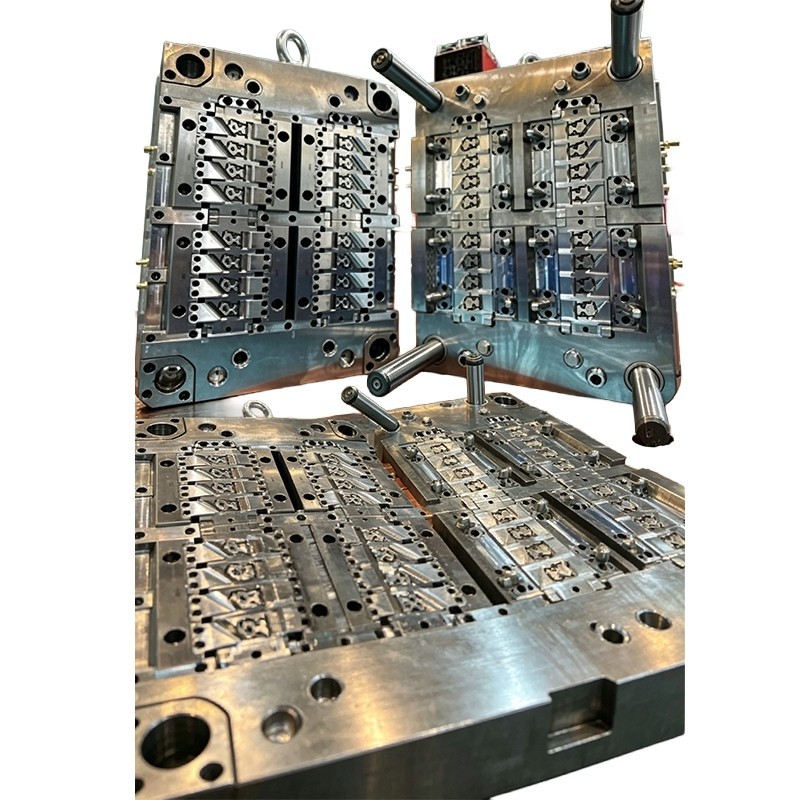
The design and manufacturing of the mould play a vital role in the precision injection moulding process. Complex - shaped parts require highly sophisticated mould designs to ensure accurate replication of the part geometry. The mould must be able to withstand high pressures and temperatures during the injection process without any deformation.
One of the key challenges in mould design is the creation of a proper gating system. The gating system is responsible for directing the molten plastic into the mould cavity. For complex - shaped parts, the gating system needs to be carefully designed to ensure uniform filling and minimize the formation of weld lines and other defects.
In addition, the cooling system in the mould is also critical. Efficient cooling is essential to ensure that the part solidifies evenly and quickly, reducing cycle times and improving dimensional accuracy. However, designing an effective cooling system for complex - shaped parts can be challenging, as the cooling channels need to be carefully placed to ensure uniform cooling throughout the part.
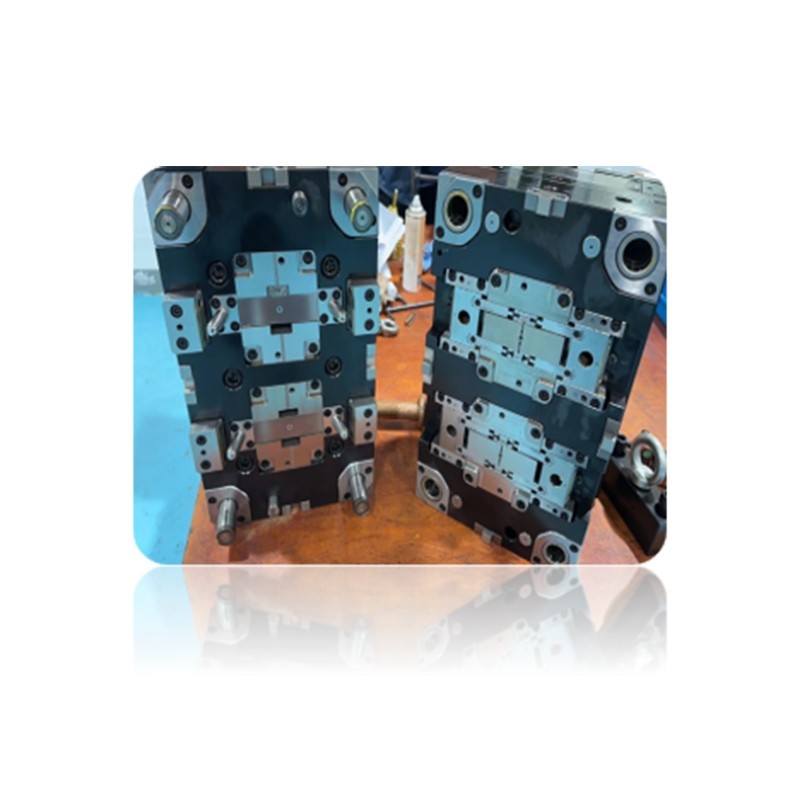
As a Precision Injection Mould supplier, we have a team of experienced mould designers and engineers who use advanced CAD/CAM software to design and manufacture high - quality moulds. We also invest in state - of - the - art manufacturing equipment to ensure the precision and accuracy of the moulds. For more information on our High Precision Plastic Injection Mould, you can visit our website.
Process Control and Optimization
Precision injection moulding of complex - shaped parts requires strict process control to ensure consistent quality. The injection moulding process involves several variables, such as temperature, pressure, injection speed, and cooling time, which need to be carefully monitored and adjusted to achieve the desired results.
Temperature control is particularly important, as it affects the viscosity of the molten plastic and the rate of solidification. If the temperature is too high, the plastic may degrade, leading to poor part quality. On the other hand, if the temperature is too low, the plastic may not flow properly, resulting in short - shots or other defects.
Pressure control is also crucial, as it determines the filling of the mould cavity. Insufficient pressure can lead to incomplete filling, while excessive pressure can cause flash or damage to the mould. Injection speed and cooling time also need to be optimized to ensure that the part is formed correctly and has the desired properties.
As a Precision Injection Mould supplier, we use advanced process monitoring and control systems to ensure that all process variables are within the specified range. We also conduct regular process audits and optimization to improve the efficiency and quality of the injection moulding process. For more details on our Precision Injection Mould services, you can refer to our website.
Quality Inspection and Assurance
Ensuring the quality of complex - shaped parts is a significant challenge in precision injection moulding. Complex - shaped parts often have tight tolerances and require high - precision measurement and inspection techniques.
Visual inspection is the first step in quality control. However, for complex - shaped parts, visual inspection may not be sufficient to detect all defects. Non - destructive testing methods, such as X - ray inspection and ultrasonic testing, are often used to detect internal defects, such as voids or cracks.
Dimensional inspection is also crucial to ensure that the part meets the specified tolerances. Coordinate measuring machines (CMMs) are commonly used to measure the dimensions of the part with high accuracy. In addition, surface finish inspection is important to ensure that the part has a smooth and defect - free surface.
As a Precision Injection Mould supplier, we have a comprehensive quality control system in place. We conduct multiple inspections at different stages of the production process to ensure that the parts meet the highest quality standards. For more information on our High Precision Mold and quality assurance processes, you can visit our website.
Cost Management
Cost management is another significant challenge in precision injection moulding of complex - shaped parts. The cost of materials, mould design and manufacturing, process control, and quality inspection can add up quickly, especially for complex - shaped parts.
To manage costs effectively, we need to optimize the entire injection moulding process. This includes selecting the most cost - effective materials, designing efficient moulds, and optimizing the process parameters to reduce cycle times and waste. We also need to balance the quality requirements with the cost constraints to ensure that the final product is both high - quality and cost - effective.
As a Precision Injection Mould supplier, we work closely with our customers to understand their budget constraints and provide cost - effective solutions. We also continuously invest in research and development to improve our manufacturing processes and reduce costs without compromising on quality.
Conclusion
Precision injection moulding of complex - shaped parts presents numerous challenges, including material selection, mould design and manufacturing, process control, quality inspection, and cost management. As a Precision Injection Mould supplier, we are committed to overcoming these challenges by leveraging our expertise, advanced technology, and strict quality control measures.
If you are in need of high - quality precision injection moulds for your complex - shaped parts, we invite you to contact us for a procurement discussion. Our team of experts will be happy to assist you in finding the best solutions for your specific requirements.
References
- Throne, J. L. (1996). Plastics Process Engineering. Marcel Dekker.
- Rosato, D. V., & Rosato, D. V. (2000). Injection Molding Handbook. Kluwer Academic Publishers.
- Osswald, T. A., & Turng, L. - S. (2003). Injection Molding Handbook. Hanser Publishers.