

As a leading supplier of enclosure connectors, I've witnessed firsthand the crucial role these components play in various industries. Enclosure connectors are essential for ensuring secure and reliable connections in electrical, electronic, and communication systems. They protect sensitive circuits from environmental factors such as dust, moisture, and mechanical stress. In this blog, I'll explore the common materials used for enclosure connectors, their properties, and applications.
Plastic Materials
Plastic is one of the most widely used materials for enclosure connectors due to its versatility, cost - effectiveness, and ease of manufacturing.
Polycarbonate (PC)
Polycarbonate is a high - performance thermoplastic known for its excellent impact resistance, transparency, and heat resistance. It can withstand high temperatures without deforming, making it suitable for applications where connectors may be exposed to heat, such as in industrial control panels or automotive electronics. PC also has good electrical insulation properties, which help prevent short - circuits and electrical interference. For example, in some heavy - duty electrical systems, polycarbonate enclosures protect the connectors from physical damage while maintaining electrical integrity.
Acrylonitrile Butadiene Styrene (ABS)
ABS is a popular choice for enclosure connectors because of its good balance of strength, toughness, and processability. It is relatively inexpensive and can be easily molded into complex shapes. ABS has moderate chemical resistance and is suitable for indoor applications where it is not exposed to harsh chemicals. Many consumer electronics use ABS - based enclosure connectors as they provide a cost - effective solution for protecting electrical connections.
Polypropylene (PP)
Polypropylene is a lightweight and chemically resistant plastic. It has a low density, which makes it ideal for applications where weight is a concern, such as in aerospace or portable devices. PP also has good fatigue resistance, meaning it can withstand repeated bending and flexing without cracking. In some outdoor applications, polypropylene enclosure connectors are used because of their ability to resist UV radiation and moisture.
Metal Materials
Metals are used in enclosure connectors when high strength, durability, and electrical conductivity are required.
Aluminum
Aluminum is a lightweight and corrosion - resistant metal. It has good thermal conductivity, which helps dissipate heat from the connectors. Aluminum enclosure connectors are commonly used in industrial applications, especially in environments where weight reduction is important, such as in transportation or aerospace. The metal can be anodized to improve its corrosion resistance and appearance. For instance, in some heavy - duty electrical wire connectors, aluminum enclosures provide a strong and lightweight solution. You can find more information about Heavy Duty Electrical Wire Connectors.
Stainless Steel
Stainless steel is known for its excellent corrosion resistance, strength, and durability. It can withstand harsh environments, including exposure to saltwater, chemicals, and extreme temperatures. Stainless steel enclosure connectors are often used in marine, food processing, and chemical industries. They provide a high - level of protection for the electrical connections, ensuring long - term reliability.
Copper
Copper is an excellent conductor of electricity, making it a popular choice for the contact parts of enclosure connectors. It has low electrical resistance, which helps reduce power losses and heat generation. Copper can be easily formed into various shapes, such as pins and sockets, to ensure a good electrical connection. In addition to its electrical properties, copper also has good corrosion resistance when properly protected. For example, in Heavy Duty 2 Pin Connector, copper contacts are used to ensure efficient power transfer.
Rubber and Silicone Materials
Rubber and silicone are used in enclosure connectors mainly for their sealing properties.
Neoprene Rubber
Neoprene rubber has good resistance to oil, ozone, and weathering. It provides a reliable seal against dust, water, and other contaminants. Neoprene gaskets are often used in enclosure connectors to prevent the ingress of moisture and foreign particles. This is especially important in outdoor or industrial applications where the connectors need to be protected from the elements.

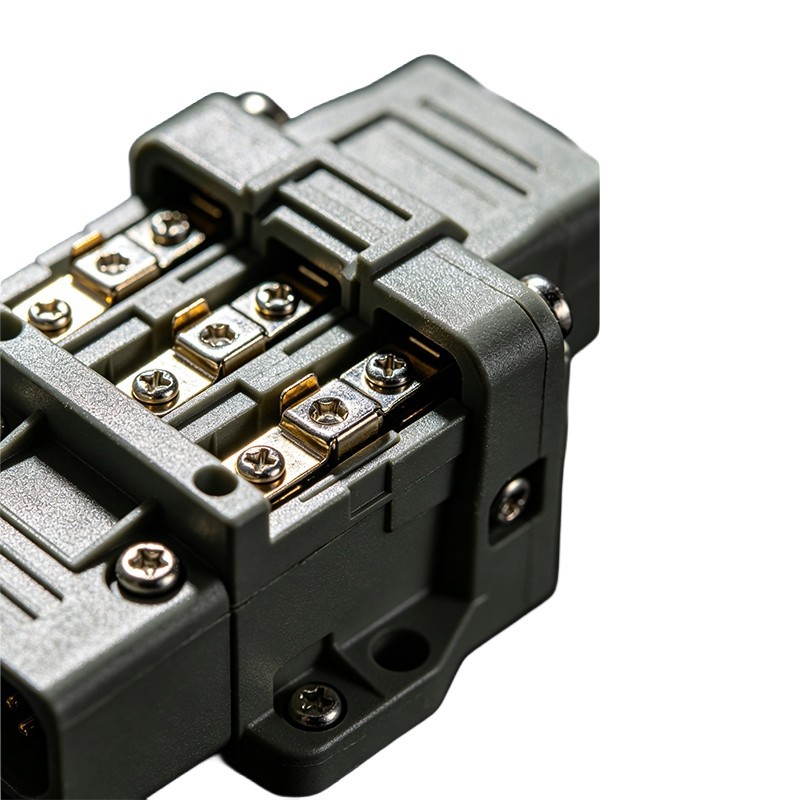
Silicone Rubber
Silicone rubber has excellent heat resistance, flexibility, and electrical insulation properties. It can operate over a wide temperature range, from - 50°C to 200°C. Silicone gaskets are commonly used in high - temperature applications, such as in automotive engines or industrial ovens. They also provide a good seal and can conform to irregular surfaces, ensuring a tight fit.
Composite Materials
Composite materials combine the properties of different materials to achieve specific performance requirements.
Fiberglass - Reinforced Plastic (FRP)
FRP is a composite material made of a plastic matrix reinforced with fiberglass. It has high strength - to - weight ratio, good corrosion resistance, and electrical insulation properties. FRP enclosure connectors are used in applications where a combination of strength, light weight, and corrosion resistance is needed, such as in the chemical and telecommunications industries.
Applications of Different Materials
The choice of material for enclosure connectors depends on the specific application requirements.
Industrial Applications
In industrial settings, such as factories and manufacturing plants, enclosure connectors need to be robust and able to withstand harsh environments. Metal materials like aluminum and stainless steel are often used for their strength and durability. Plastic materials such as polycarbonate and ABS are also popular for their cost - effectiveness and ease of customization. For example, in heavy - duty industrial control systems, Heavy Duty Ethernet Connector with metal enclosures are used to ensure reliable data transmission in a noisy and potentially hazardous environment.
Automotive Applications
In the automotive industry, enclosure connectors need to be lightweight, reliable, and able to withstand vibrations and temperature variations. Plastic materials like polypropylene and ABS are commonly used for their weight - saving properties. Copper is used for the electrical contacts to ensure efficient power and signal transmission.
Consumer Electronics
For consumer electronics, cost - effectiveness and aesthetics are important factors. Plastic materials such as ABS and polycarbonate are widely used due to their low cost and ability to be molded into attractive shapes. Rubber and silicone gaskets are used to provide a seal and prevent dust and moisture from entering the connectors.
Why Choose Our Enclosure Connectors
As a supplier of enclosure connectors, we offer a wide range of products made from high - quality materials. Our connectors are designed to meet the diverse needs of different industries. We use advanced manufacturing processes to ensure the precision and reliability of our products. Whether you need a connector for a heavy - duty industrial application or a consumer electronics device, we have the expertise and resources to provide you with the right solution.
If you are interested in our enclosure connectors or have any questions about the materials and applications, please feel free to contact us for a procurement discussion. We look forward to working with you to meet your specific requirements.
References
- "Plastic Materials for Electrical Applications", Electrical Engineering Handbook
- "Metal Alloys in Connector Design", Journal of Connector Technology
- "Sealing Materials for Enclosure Connectors", Rubber and Plastics Research Journal