
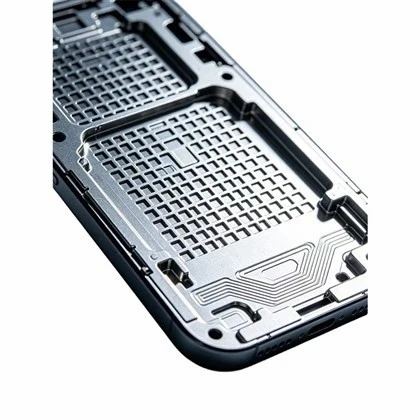
Consumer Electronics Plastic Structural Parts
Product Overview
Custom plastic structural parts form the rigid internal skeleton and protective outer housing of modern consumer electronics. Engineered for precise mechanical fit, drop-impact resistance, and aesthetic integration, these components are manufactured via high-precision injection molding under ISO 9001 certified quality management systems. Designed according to custom CAD data, our parts support diverse applications ranging from compact smart home hubs to handheld electronic enclosures, ensuring seamless assembly and structural reliability.
Technical Specifications & Tolerances
|
Parameter |
Standard Capability |
Technical Notes |
|
Dimensional Tolerance |
± 0.02 mm to ± 0.05 mm |
Achieved via high-speed CNC machining and precision electric molding machines. |
|
Wall Thickness |
0.8 mm - 3.5 mm |
Optimized for uniform cooling and minimal sink marks. |
|
Surface Finish |
SPI-A2 to D3 / VDI 3400 / Texture Etching |
Ranging from optical high gloss to matte texturing. |
|
Mold Cavitation |
Single cavity to 16+ cavities |
Tailored to annual production volume and tool life requirements. |
|
Injection Press Tonnage |
50T - 550T |
Supports small intricate housings to mid-sized structural frames. |
|
Compliance & Quality |
ISO 9001, RoHS, REACH, UL94 V-0 |
Material test reports, COA, and FAI provided per batch. |
Core Functional Features
High Structural Rigidity: Ribbed and boss-reinforced internal geometry prevents flex and protects sensitive internal PCBs.
Tight-Tolerance Snap-Fits: Engineered flexibility and precise undercuts ensure secure, toolless assembly for multi-part enclosures.
Optimized Gate Locations: Strategic gate positioning minimizes visible weld lines and eliminates cosmetic blemishes on exterior surfaces.
Controlled Shrinkage: Mold flow analysis (CAE) predicts resin behavior during cooling to maintain dimensional stability across complex geometries.
Multi-Material Compatibility: Supports engineering thermoplastics with specific mechanical and thermal profiles.
Materials & Manufacturing Evidence
Recommended Resins
ABS / PC+ABS: High impact resistance, balanced rigidity, and excellent paintability/plating performance.
PC (Polycarbonate): High dimensional stability, optical clarity (transparent grades), and elevated heat resistance.
PA (Nylon / PA6 / PA66): High tensile strength and wear resistance, frequently used for gear-housing or high-stress mechanical brackets.
POM (Acetal / Delrin): Low friction coefficient and high fatigue endurance for moving structural elements.
Manufacturing Process & Verification
DFM & Mold Flow Analysis: Evaluating draft angles, wall uniformity, and gate placement via CAE software prior to tooling fabrication.
Precision Tool Making: High-speed CNC milling, wire EDM, and mirror EDM processing to build hardened tool steel cores and cavities (e.g., P20, H13, S136).
Injection Molding: Closed-loop electric presses running under optimized melt temperatures, injection speeds, and cooling cycles.
Secondary Operations: Ultrasonic welding, heat stake insertion, pad printing, and EMI/RFI shielding coating.
Typical Applications
Smart Home Hardware: Voice assistant enclosures, smart thermostat housings, and automated sensor brackets.
Portable & Wearable Electronics: Handheld device chassis, ruggedized outer shells, and internal battery compartments.
Audio & Entertainment: Wireless speaker internal acoustic chambers, headphone structural clips, and remote control housings.
IoT & Networking Gateways: Compact router enclosures, industrial IoT sensor mounts, and connector interfaces.
Customization Capabilities
Tooling Ownership: Client-owned dedicated molds stored under secure, climate-controlled conditions with systematic maintenance tracking.
Insert Molding: Integration of pre-formed brass threaded inserts, stainless steel pins, or stamped metal clips directly into the plastic matrix during molding.
Overmolding: Dual-material processing combining rigid substrates (PC/ABS) with soft-touch grips (TPE/TPU).
Color Matching: Custom Pantone / RAL color matching using masterbatch compounding or pre-colored resin pellets.
Quality Control & Metrology
Incoming Material Inspection: Melt flow index (MFI) testing and moisture content verification prior to production.
In-Process Monitoring: Automated cycle parameter logging and regular first-article inspection (FAI) during production runs.
Dimensional Metrology: CMM (Coordinate Measuring Machine) and optical projector verification against 3D CAD models.
Mechanical & Functional Testing: Drop impact testing, snap-fit insertion force verification, and cross-hatch adhesion tests for secondary coatings.
Documentation Packages: Full dimensional inspection reports, material COAs, and PPAP Level 3 documentation packages available upon request.
Frequently Asked Questions
Q: What is the typical lead time for custom tooling and initial samples?
A: Tooling fabrication typically requires 3 to 5 weeks depending on part complexity and mold steel selection. T1 samples are delivered within 5 business days following mold completion and dry-cycle testing.
Q: How do you handle warpage on thin-walled consumer electronics parts?
A: We run CAE mold flow simulations during the DFM phase to identify cooling imbalances. Tooling is then designed with conformal cooling channels or balanced gate locations to prevent warpage.
Q: What is your standard policy regarding mold maintenance and lifespan?
A: Customer-owned molds are guaranteed for the agreed production lifecycle (e.g., 300,000 to 1,000,000 shots). Preventive maintenance (cleaning, polishing, and seal checks) is performed after every production batch at no extra cost.
Q: Can you sign an NDA before we share 3D CAD models?
A: Yes. We routinely execute mutual Non-Disclosure Agreements (NDAs) to protect your intellectual property and proprietary product designs prior to engineering review.
Call to Action / RFQ Guidelines
To receive an accurate technical quotation within 24 hours, please provide the following project details to our engineering team:
3D CAD Data: STEP, IGES, or Parasolid format.
2D Engineering Drawing: Indicating critical dimensions, tolerances (±), and surface finish requirements (SPI standards).
Material Specifications: Resin grade or specific mechanical/regulatory requirements (e.g., flame retardant UL94 V-0).
Volume Requirements: Estimated batch size and annual usage forecast.
Secondary Operations: Requirements for printing, shielding, assembly, or insert placement.
Hot Tags: consumer electronics plastic structural parts, China consumer electronics plastic structural parts manufacturers, suppliers, factory
Send Inquiry
